
Keto 101 · Lesson 4 of 6
Keto Flu: Symptoms, How Long It Lasts and How to Avoid It
Why the first week of keto can bring headaches, tiredness and cramps, how long keto flu lasts, and the simple electrolyte fixes that prevent most of it.
3 min readUpdated By The Keto Vibe Kitchen
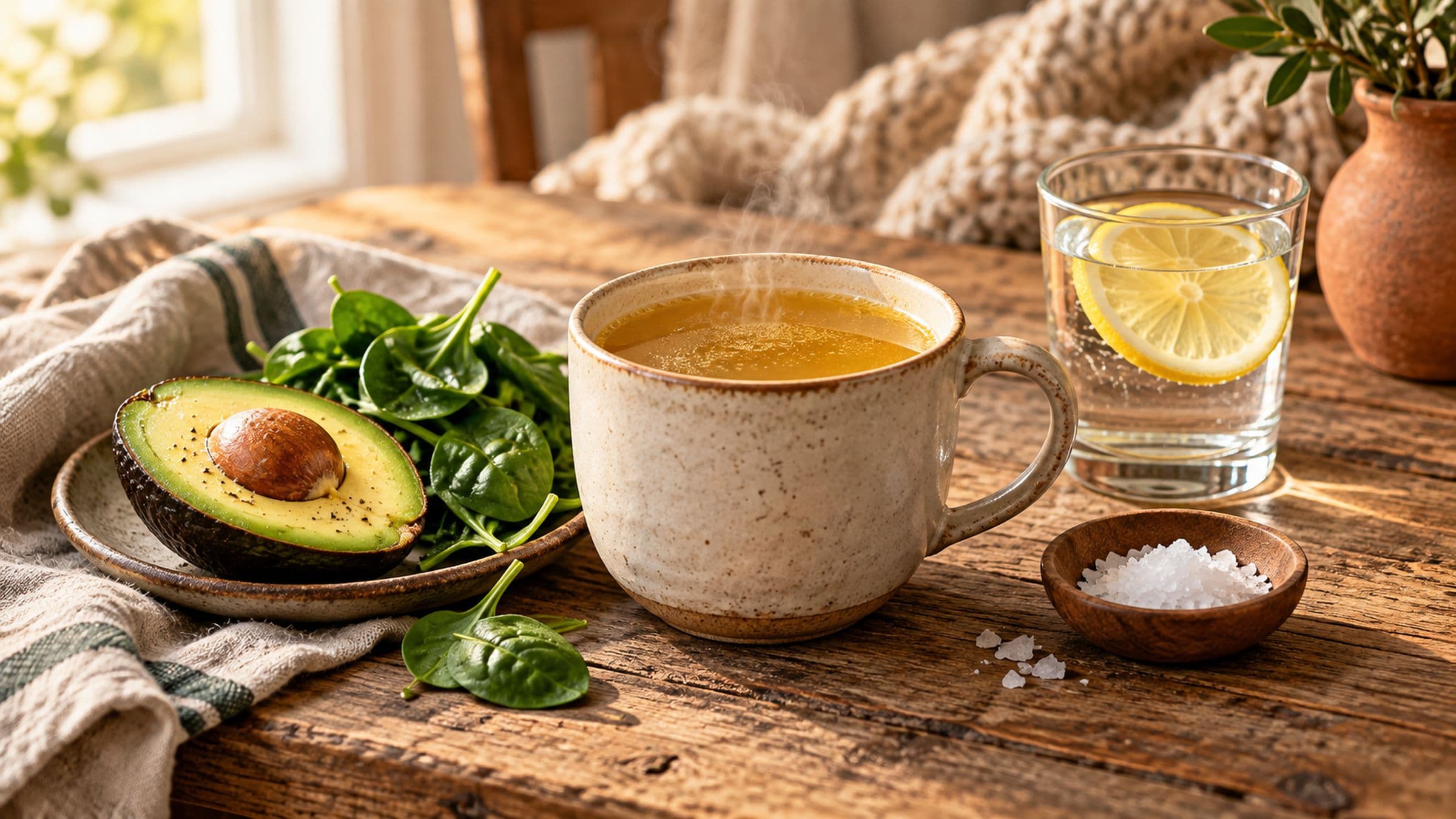
You cut the carbs, you’re three days in, and you feel terrible: headachy, flat, foggy, maybe crampy. Welcome to keto flu. It’s not a real flu and it isn’t contagious. It’s your body adjusting to a new fuel, and it’s almost always short and fixable.
Symptoms of keto flu
The most common complaints in the first week:
- headache
- tiredness and low energy
- brain fog or trouble concentrating
- irritability
- muscle cramps, especially in the calves at night
- dizziness when standing up
- nausea or mild stomach upset
- sugar cravings
- poor sleep
Not everyone gets it, and most people get only a few of these.
Why it happens
Two things change quickly when you stop eating carbs.
You lose water. Your body stores carbohydrate as glycogen, and each gram of glycogen is stored with about three grams of water. As glycogen runs down in the first days, that water leaves, which is why the scale drops quickly in week one.
You lose sodium. Low insulin signals the kidneys to excrete more sodium, and other electrolytes such as potassium follow. Low sodium and low fluid volume explain the headache, dizziness and fatigue better than anything else.
On top of that, your cells are still getting used to burning fat and ketones instead of glucose. That adaptation takes a few weeks to complete, but the worst of it is over in days.
How long keto flu lasts
A typical timeline:
| Day | What most people notice |
|---|---|
| 1–2 | Hunger and cravings; energy is normal |
| 2–4 | Headache, fatigue and fog peak as glycogen runs out |
| 4–7 | Symptoms fade; many feel steadier than before |
| 2–4 weeks | Fully fat-adapted; exercise feels normal again |
If you top up salt and fluids from day one, you may barely notice the middle row.
How to prevent and fix it
1. Get more sodium
This is the single most effective fix. Salt your food generously and add one or two cups of salty broth a day in the first week. Many low-carb clinicians suggest a few extra grams of sodium a day while adapting.
2. Drink enough water
You’re losing more fluid than usual, so drink to thirst and a little beyond. Pale yellow urine is a good sign.
3. Eat potassium and magnesium
Avocado, spinach, salmon, mushrooms and pumpkin seeds are good low-carb sources of both. Magnesium in particular helps with night cramps; some people take a supplement such as magnesium glycinate (check with your doctor if you take other medication).
4. Eat enough fat
Cutting carbs and fat at the same time leaves you with no fuel. In the first week, eat until you’re full; you can fine-tune calories later.
5. Go easy on exercise
Gentle walking is great. Save hard workouts for week two, when your body has adapted.
6. Sleep
Fatigue is worse when you’re short on sleep. Aim for a regular bedtime in the first week.
Recipes that help
Broth-based soups, salty roast vegetables, salmon and avocado all help with electrolytes. Browse the recipes below, or see the keto food list for more potassium-rich options.
Next lesson: keto sweeteners compared, for when the sugar cravings hit.
Test yourself
4 questions · +10 XP each
Question 1 of 4
What is the main cause of keto flu?
Finish line. Read to here to log this guide and earn 50 XP.
Quick answers
How long does keto flu last?
For most people it starts one to three days after cutting carbs and fades within a few days to a week. Topping up sodium and fluids often shortens it a lot.
What is the fastest way to get rid of keto flu?
Have a cup of salty broth or a glass of water with a quarter teaspoon of salt, drink more water through the day, and make sure you’re eating enough fat. Many people feel better within an hour.
Is keto flu dangerous?
It is uncomfortable but usually harmless and short. Severe symptoms such as vomiting, confusion, a racing heart or chest pain are not normal keto flu; get medical help.
Can you avoid keto flu completely?
Many people can, by salting food generously, drinking enough water, eating potassium- and magnesium-rich foods and not cutting calories hard in the first week.
Put it into practice
Recipes to try
 29gnet carbs
 3gnet carbs
 6gnet carbs
 5gnet carbs
Keep reading